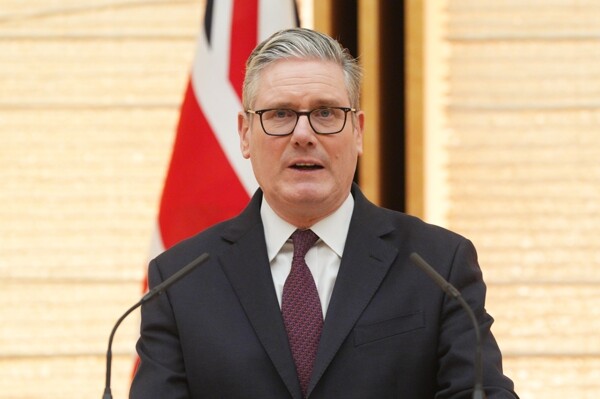
British Prime Minister Keir Starmer has shared a heartfelt message to his teenage son, expressing his determination to build a different relationship with him than the strained one he had with his late father.
In a video posted on Instagram to mark International Men's Day, Starmer addressed his eldest son (17 years old) without revealing his name. He highlighted the challenges faced by young people today, including mental health pressures, questions about masculinity, and the impact of social media.
Starmer spoke about a personal experience with his son while watching a TV show about teenagers' lives, emphasizing his commitment to mutual support. He also acknowledged the significant sacrifices made by his family — his son, daughter, and wife Victoria — since he became Prime Minister last year.
He reflected on his complex relationship with his father, Rodney, who was often distant and with whom he had little communication, which motivated him to foster a more open relationship with his own children.
In the message, Starmer told his son: «It feels like we brought you home yesterday, but I'm excited for your journey ahead. Today, at 17, you're taller than me, a confident and kind young man, and I am so incredibly proud of you».
He admitted to painful memories from his childhood: «My relationship with my father wasn't good. When my mother was ill, he cared for her devotedly, but we never talked. I was determined to have a completely different relationship with you and spend as much time as possible with you».
Starmer also spoke of an internal struggle in his youth, haunted by a voice telling him he «wasn't good enough.» He offered advice to his son and all children: «My message to every child growing up today: don't listen to that voice. Value what you have. Every child should be able to achieve their dreams. You and your sister are my pride and joy, and I love you both».
Starmer's message coincided with the UK government's announcement of a new national strategy for men's health, addressing issues like suicide and alcoholism. The strategy aims to create plans to tackle the physical and mental health challenges that disproportionately affect men. The Ministry of Health previously noted that men are often reluctant to seek help, tend to silently endure pain, and are more likely to smoke, drink alcohol, and use drugs compared to women.