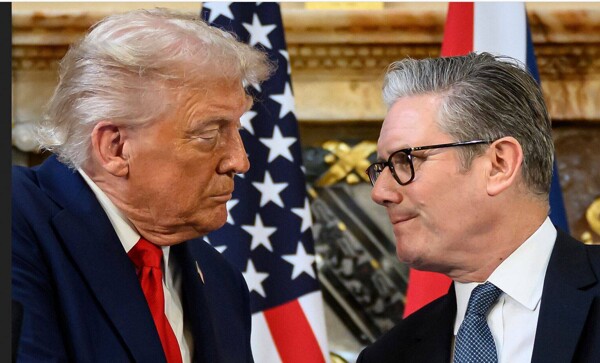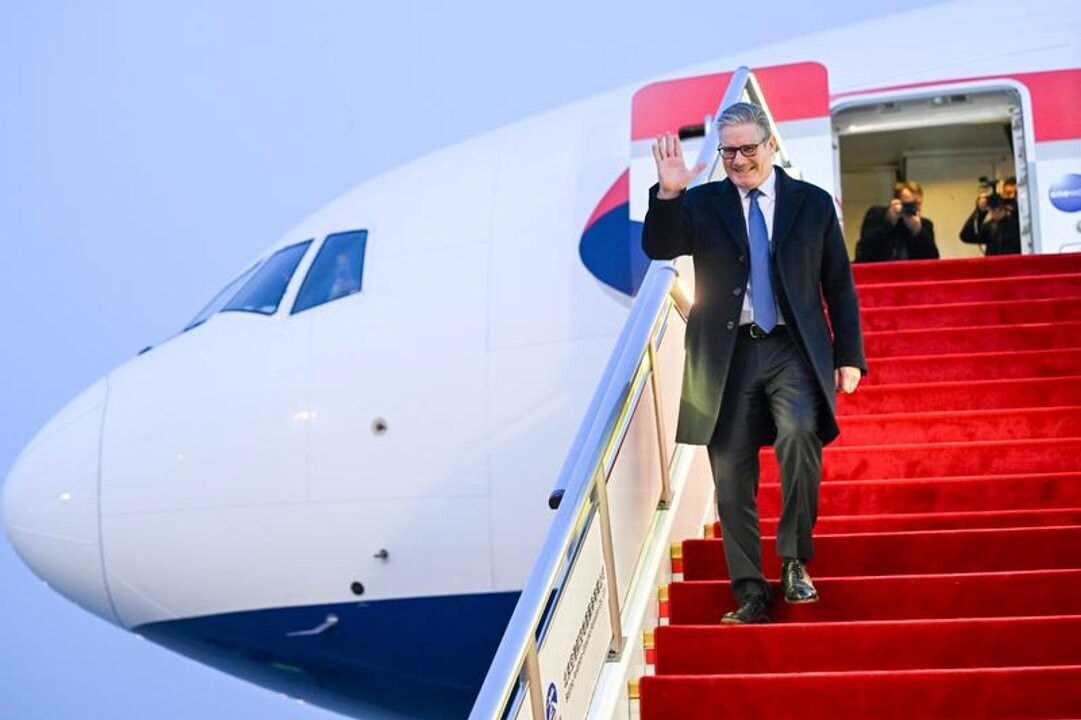
British Prime Minister Keir Starmer stated today that the United Kingdom is working with its allies on a 'viable' plan to reopen the Strait of Hormuz and that 'it will not be dragged into a wider war,' according to international media. In turn, the German government's spokesman, Stefan Kornelius, stated that the military conflict between Israel and the United States against Iran 'has nothing to do with NATO.' 'We are working with all our allies, including our European partners, to develop a collective viable plan that can restore freedom of navigation in the region as soon as possible and alleviate economic impacts,' Starmer told the press. 'I want this war to end as soon as possible, because the longer it drags on, the more dangerous the situation becomes and the worse it is for the cost of living,' Starmer continued, cited by EFE, in a statement that was echoed by several international media outlets consulted by the Noticias Argentinas news agency. Starmer emphasized that the reopening of the strait, through which a large portion of the crude oil consumed globally passes, is important for guaranteeing the stability of the oil market, but he acknowledged that it is 'not an easy task.' 'That is why we are working with all our allies, including our European partners, to develop a collective viable plan that will restore freedom of navigation in the region as soon as possible and mitigate the economic impact,' he described. He then stressed that the United Kingdom's priority is the protection of British citizens in the Middle East. From Germany 'NATO is a defense alliance for the defense of the territory' of its members and, in the current situation 'there is no mandate to deploy NATO,' declared the German spokesman, Stefan Kornelius, at a press conference. In turn, European diplomacy chief Kaja Kallas commented: 'We are interested in keeping the Strait of Hormuz open, and that is why we are debating what we can do about it from the European side.' Several ministers showed prudence and asked for time before making a decision on a possible modification of the mandate of said mission, which currently consists of three patrol vessels. Germany's Defense Minister Boris Pistorius clarified that his country will not offer 'any military participation,' although it is willing to 'guarantee, through diplomatic means, the security of transit through the Strait of Hormuz.' And he took the opportunity to warn that 'this war started without any prior consultation.' All these statements come after demands from the President of the United States, Donald Trump, for NATO and even China to collaborate in the unblocking of the Strait of Hormuz.