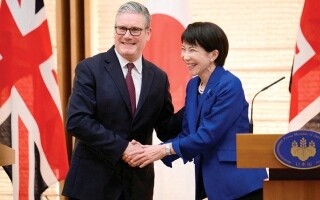
Doubts in Japan are growing about the UK's commitment to proceeding with its joint program to develop advanced fighter jets in cooperation with Italy, amid a noticeable slowdown in progress, attributed to British delays linked to financial pressures and budget problems. The Global Combat Air Programme (GCAP) is an ambitious strategic initiative aimed at developing a new generation of advanced fighter jets by 2035 through a partnership between Japan, the UK, and Italy. These three countries seek through this project to reduce the technological gap with the United States, which still leads the world in manufacturing the most advanced military aircraft. However, a series of delays related to the UK's defense investment plan have hindered the signing of a main contract for design and development work with 'Team Tempest', the joint industrial entity representing the major defense companies of the participating countries. This disruption has significantly slowed the project's progress. One program participant described the current situation as 'disastrous', pointing out that the economic challenges facing the UK are directly impacting the project's progress. Another participant acknowledged a 'growing frustration' on the Japanese side due to recurring delays attributed to the UK's economic conditions. Strategic Priorities Disagreements are not limited to the financial aspect; they also extend to differences in strategic priorities among the partners. While Japan focuses on developing a new advanced fighter in the middle of the next decade, the UK and Italy tend to lean towards a broader concept of creating an 'integrated system of systems', including an aircraft capable of managing and operating swarms of drones in a coordinated manner without being tied to a strict timeline. Some workers in the program believe this divergence in vision may push the UK to slow the project's pace to spread the cost over a longer period, to align with its current financial situation. This tension comes at a time when the world is seeing an increase in security concerns, especially amid conflicts in the Middle East and the unpredictable policies of the Donald Trump administration, which prompted its allies in NATO to enhance their self-defense capabilities. The primary goal of the GCAP was to develop modern fighters to reduce dependence on American F-35 aircraft, which form the backbone of the air power of NATO countries. On the financing front, the UK had originally planned to unveil a 10-year defense investment plan in the autumn of 2025, but its announcement has been postponed several times due to financial constraints. There is a funding gap of around £28 billion over a decade, according to officials familiar with the plan. In turn, Italy has revised its cost estimate for its participation in the design and development phase to €18.6 billion, three times the previous estimates, and has finally agreed to allocate €8.8 billion as an initial tranche to support the program. In an attempt to ease financial pressures, Tokyo has shown greater flexibility toward the idea of making deals with potential future buyers of the aircraft to reduce the financial burden on partners. Canada is a prominent candidate in this regard. Nevertheless, Japan remains cautious about involving new partners in the design and development phases due to potential additional complications. From the Financial Times, Defense Investment Plan The UK's defense minister, John Healey, confirmed in parliament his government's commitment to maintaining momentum for the GCAP, stating that work is underway on the defense investment plan without specifying a clear date for its announcement. Earlier, the UK's Ministry of Defense emphasized the depth of cooperation among the three participating countries (the UK, Italy, and Japan), citing the opening of the program's joint headquarters in Reading and the launch of the joint industrial entity to execute the project. Japan, at the ministerial level, has expressed growing concern over British delays, especially regarding London's commitment to providing the necessary funding for the project. Despite attempts by British Prime Minister Keir Starmer to reassure his Japanese counterpart, Sanae Takaichi, during an official visit to Tokyo this year, those reassurances have not convinced the Japanese side, particularly in the absence of concrete steps on funding. The international main contract for the project was expected to be signed about six months ago, which would have allowed a new phase of funding worth billions of pounds to be released to 'Team Tempest', but its signing has been repeatedly delayed due to the postponement of the announcement of the UK's defense investment plan. Financial Concerns Currently, the main companies involved in the program—British BAE Systems, Italian Leonardo, and Japanese Mitsubishi Heavy Industries—continue to work on engineering and design aspects using the available national funding. However, according to two sources familiar with the program, there are fears that British funding could run out in the coming weeks.