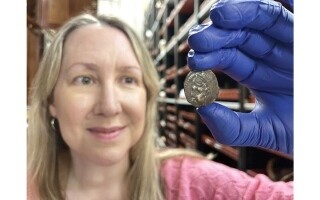
A mysterious 2000-year-old coin was used to pay a bus fare in Leeds without the owner or the driver realizing its value at the time. The coin eventually ended up with a hobbyist and later a specialized museum. According to the Metro newspaper, the mysterious coin used to pay a bus fare in Leeds decades ago is actually rare and dates back over 2000 years. Initially, the coin was in the possession of the former treasurer of the Leeds transport authority, James Edwards, who was responsible for collecting fares from bus and tram drivers and counting them at the end of each day. He would set aside any coins that were not suitable for use, foreign, or counterfeit, and Edwards would take them home to give to his grandson Peter as rare collectibles. Peter Edwards, 77, said: "My grandfather would find foreign coins, set them aside, and when I visited him, he would give me some of them." He added: "It wasn't long after the war ended, so I imagine the soldiers came back with coins from the countries they had been sent to." Peter kept the coins in a safe place for over 70 years, but one of them in particular puzzled him due to its unfamiliar markings. Now, the coin will become part of the Leeds Discovery Centre collection, which is a specialized museum housing thousands of artifacts from cultures spanning centuries of history. Determined to uncover its origins, he conducted research that revealed the coin was made in what was formerly a Carthaginian settlement on the Spanish coast. The artifact bears the image of Melqart, who is often likened to the Greek hero Hercules, wearing a lion's skin. At the time, Phoenician coins were sometimes designed with symbols inspired by the Greek style to attract traders. Realizing the historical significance of the coin, Peter contacted Leeds museums and galleries and offered it as a donation so it could be studied and preserved properly.