Britain was an exception to this rule, having secured a large rebate from the European budget, negotiated in the 1980s by the late British Prime Minister Margaret Thatcher. Furthermore, Britain would have to accept a visa-free movement system for EU citizens, which had been a source of much controversy over immigration before Brexit. The idea that Starmer would reopen Britain's borders, spend billions of public pounds on Brussels, and accept membership in a single currency blamed for repeated financial crises in Europe is absurd, and this will never happen. Again, why did Starmer reopen this issue? Utter incompetence cannot be ruled out. What does he intend to do now? The probability of another referendum on rejoining the EU would be madness, especially given the unpopularity of the Labour government and Starmer himself. His deputy, David Lammy, has more or less signaled his support for rejoining. This will never happen for several reasons, but why is the British government apparently trying to revive the intense culture war that followed the original Brexit vote?
The Brexit Decision The decision to leave the EU, to which Britain had joined half a century ago under the name 'European Economic Community', was the result of a very narrow referendum. Sturgeon stated that since the Scots voted to remain in the EU, Scotland should be allowed to secede from the United Kingdom.
The European Divide Ultimately, after epic nightly battles in the House of Commons over the precise terms of Britain's exit deal with Brussels, Britain officially left the EU in January 2020. More importantly, it secured an opt-out from the euro—the single European currency—as countries seeking to join the bloc are usually required to adopt the euro as their currency as a condition of membership. Starmer, before becoming Labour leader, and minister Nicola Sturgeon of the Scottish National Party led a movement calling for a second referendum. This unresolved divide has torn British society and is undoubtedly a factor in the economic and geopolitical stagnation Britain is experiencing.
A Minefield So, can Keir Starmer be serious about reopening these wounds and sparking another battle over Brexit? He promised before being elected Prime Minister in July 2024 that the Labour Party would not seek to rejoin the European single market, the customs union, or the Schengen area. Starmer has been desperate since entering office, and this may just be another facet of his government's dysfunction.
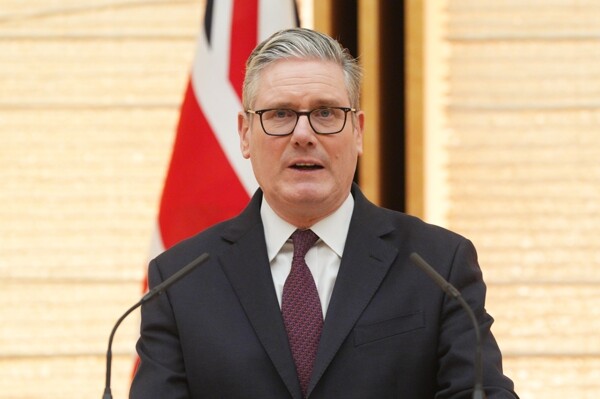
Current British Opinion Some polls suggest that British voters currently view the EU with favor. But that is before they stop to consider the consequences of rejoining. The EU will not welcome the 'erring' United Kingdom back with open arms. It will soon be 10 years since the referendum on UK membership in the EU, yet it seems the British cannot get over Brexit, as Labour Prime Minister Keir Starmer, in a lengthy interview with The Observer, has reignited speculation about the UK's return to the EU. In reality, the UK's growth since the referendum has been on par with similar economies like France and Germany. The divide over Europe has become part of a wider culture war between the liberal, pro-migration elite in academia, media, and big corporations, and the so-called 'left behinds'—working-class voters in economically deprived areas who opposed mass migration. Britain has never been more divided than it is now. Yet, those who wanted to Remain in the EU continue to insist that Brexit led to a slowdown in the UK's economic growth. The then Prime Minister, new Conservative Boris Johnson, won a landslide election on his promise to 'Get Brexit Done'. Conservative Prime Minister David Cameron resigned the morning after the vote, as the losers refused to accept the result, and commentators in left-wing newspapers The Guardian and The Observer claimed that voters were misled by Russian disinformation spread by internet algorithms, and prominent Brexit campaigners received Russian funding. However, the Electoral Commission found in its investigation that the claims of interference were baseless, yet many on the left still believe that Russian President Vladimir Putin tipped the scales against Remain. Left-wing politicians continued to argue that a decision of such magnitude should not have been taken by a narrow margin (though they would never have said this had the result been the other way). Why, then, is he wading into another minefield?
A Heavy Price Undoubtedly, Starmer knows that this will never happen, as the EU will not welcome the 'erring' UK back with open arms and will impose a heavy price on its return, if only to deter others. Just last month, Brussels effectively prevented the UK from joining the European Defence Fund PESCO by imposing punitive entry fees, which the British government could not accept. Some Brexit voters certainly feel regret. Brussels has made it clear that the UK would have to return to the bloc on the EU's 'terms'. Before Brexit, the UK had enjoyed an exceptionally favorable deal, one that may never be repeated. Marches and protests against Brexit went on for years outside Westminster. Newspapers like the Financial Times and The Economist believe that Britain has lost out by being shut out, to varying degrees, from a 500-million-strong European market. In the June 2016 Brexit referendum, 52% voted to leave, against 48% to remain in the 28-nation bloc. The result was a shock to the media, which had expected Remain to win, as well as to the British liberal-left establishment. In some polls, he is the least popular Prime Minister since polling began in 1977.