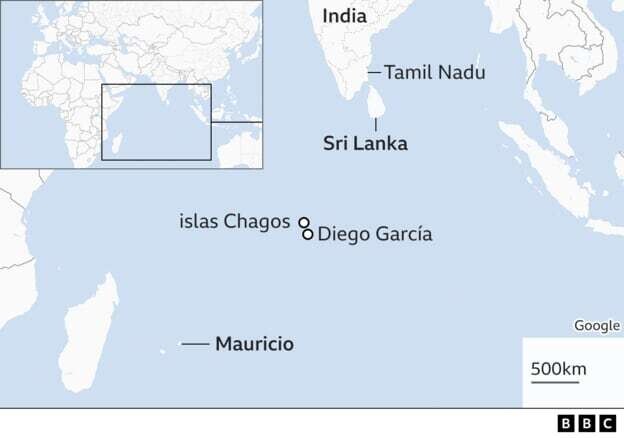
Diego García is a tiny atoll in the center of the Indian Ocean that almost no one could locate on a map. Yet its importance far exceeds its modest size. At the beginning of the 20th century, Panama was not the nation we know today. Today, the scenario again resembles the grand strategic games of the past. Small islands, remote ports, and maritime straits are regaining an importance that many had forgotten. Diego García is one of those tiny points. A port or an oil pipeline can be built in a few years, but protecting them from crises or changes in government is much more difficult.
At the same time, a different strategy began to consolidate in Washington. The United States refocused on the physical map of the planet. This decision reordered the history of the Isthmus and consolidated the United States as a global maritime power long before World War II. The Panama Canal turned geography into power. Victory is achieved through infrastructure, trade, debt, and political alliances that create dependency.
The importance of Diego García cannot be understood without observing the broader geopolitical landscape. In the 21st century, competition is not limited to massive armies and open battles. It is also decided in small, remote, and seemingly irrelevant places. In this logic, Diego García acquires special importance. Whoever controls the atoll can monitor the maritime routes connecting the Persian Gulf with Asia and Europe. Controlling this point is equivalent to monitoring a central corridor of world trade.
Since 1970, the atoll has hosted a joint base of the United Kingdom and the United States. From here, bombers took off during the Gulf War and the invasion of Iraq in 2003. Its location allows long-range bombers to reach the Red Sea, the Persian Gulf, and the Strait of Malacca. It also serves as a support for nuclear submarines and for surveillance and tracking capabilities.
However, the atoll's history has a dark stain that many prefer to ignore. Between 1968 and 1973, about two thousand Chagossians were expelled and sent to Mauritius and the Seychelles. Their communities were dismantled and their dogs were culled. The legal dispute continued for decades until, in 2019, the International Court of Justice concluded that British control was illegal and recommended transferring sovereignty to Mauritius.
This dispute has created a complex scenario where formal allies may have different priorities. Beijing strengthened its relationship with Mauritius, the African country that claims sovereignty over the Chagos Archipelago, where Diego García is located. In 2019, Mauritius signed a free trade agreement with China, the first between an African country and Beijing. Some analysts believe that handing over archipelago sovereignty to Mauritius, even with a long-term military lease, could open the door to future geopolitical pressures.
Meanwhile, another actor is watching the situation closely: India. For New Delhi, the Indian Ocean is its natural sphere of influence. For years, India has watched with concern as China expands its presence in islands and ports in the region. India is trying to offer Indian Ocean countries an alternative based on economic cooperation and development.
The world is no longer what it was twenty years ago. Decades of US sole superpower status created an illusion of permanence. Today, the competition among great powers is again playing out for every point on the map that can tip the balance. For many Western strategists, the fear is not that China will try to occupy the atoll with soldiers. The most likely scenario is much more subtle: networks of telecommunications, economic agreements, technological cooperation, or political influence that grant indirect strategic access. This type of presence can be almost as effective as a formal military base.