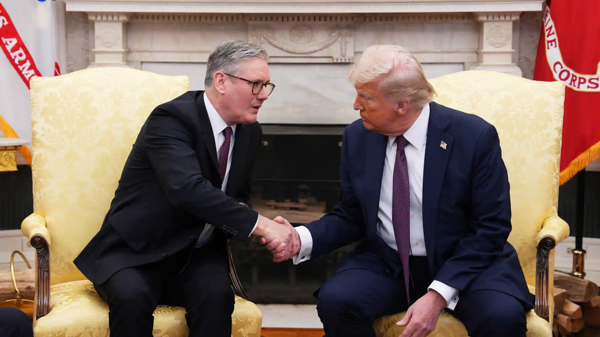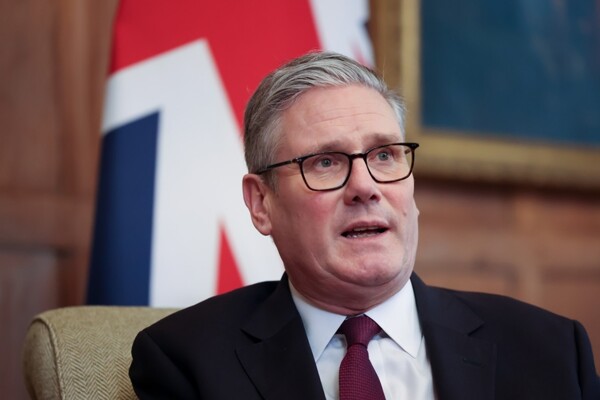
The UK plays a pivotal role as the sole intermediary capable of communicating between Europe's two largest armies (German and Polish) on one hand, and the United States on the other. The linguistic, legal, and historical ties, as well as the deep mutual cultural understanding between America and the UK, cannot be simply disregarded. This is why the UK is the only European power participating in the 'AUKUS' agreement (which can be said to have been concluded at France's expense), aimed at containing China's growing influence in the Indo-Pacific region. The UK is the only European partner with the reach, deployment capabilities, and specialized assets to play a role on both continents (Europe and the Americas) simultaneously. This trust and closeness have enabled the United Kingdom to play its most harmonious role, which is the integration of military and intelligence at the highest possible level with the United States. No other country has a relationship with the US that works in a similar way, and thanks to this implicit trust, the UK has continued to play a role that no other ally could. Furthermore, British intelligence continues to prove its capacity for innovation, and the UK's independence from EU institutions allows it to pursue closer economic and regulatory integration with the United States, which could be another step towards deeper integration of the two countries' military and industrial supply chains. The US needs a bridge to connect it with Europe amid its shift, and early indicators suggest the UK will be that bridge. There is another question that only the British can answer: should the UK follow America to the Pacific? This question has come to the heart of a wider debate about Britain's strategic identity. In the book 'Britannia: Rethinking Britain's Grand Strategy and the Art of Government,' the author argues that the UK can no longer rely on inherited assumptions about its global role and must align its ambitions with its capabilities in a more disciplined manner. For example, the UK lacks the necessary land capabilities to provide tangible support to forces like the Polish army in Eastern Europe. Advanced Capabilities It can be argued that deploying naval forces to the Far East better serves UK interests. The two new British aircraft carriers, equipped with American-made fighters, a fleet of nuclear submarines, and advanced reconnaissance capabilities, are more suited to joining a deterrent force against China as part of the UK-US-Australia alliance, rather than deploying them on land across the vast spaces of Eastern Europe. While America and the UK each care about their core interests, it is clear there is a significant convergence of their goals and capabilities, and their paths to influence and prosperity are intertwined. Ironically, the US moving away from Europe could lead to strengthening the special relationship between Washington and London across the Atlantic and the Pacific. The US distancing itself from Europe could lead to strengthening the relationship between Washington and London across the Atlantic and Pacific. The UK's independence from EU institutions enables it to pursue closer economic and regulatory integration with America. US President Donald Trump is doing what US presidents have threatened to do since the turn of the millennium: turning the United States into a theater of military operations in the Indo-Pacific region, far from Europe. However, events that have made headlines over the past 12 months, especially those concerning Greenland, reveal a more cautious transatlantic dialogue. This week, two major NATO bases, including one in Norfolk, Virginia, were handed over to European leadership. While it cannot be denied that the US will play a smaller role in defending Europe this century, this step, which includes transferring Atlantic Command to British leadership, indicates that the US is serious about building European capabilities. The handover of operational command of joint forces means that remaining US forces in joint deployments will come under the command of British and European officers. In response to US pressure, Europe has begun to invest more seriously, though not yet sufficiently, in its own defense. Reducing Europe's dependence on US planning, command, and control systems is necessary for building capabilities and enabling the US to focus on China. The US retains the Supreme Allied Commander post, taking command of NATO naval forces based in the UK, reflecting growing concern over Russian maritime incursions into the Arctic. Collectively, these changes will strengthen European armies and their ability to coordinate, while also ensuring the alliance achieves US priorities. Leadership Responsibilities The possibility of adopting such mutually beneficial arrangements proves that NATO continues to provide invaluable value to all participating nations. The UK, in particular, as these leadership appointments show, will play a more important role as the US posture in Europe shifts from deploying military assets and operational command to a more specialized and expert role that no one else can perform. The only location in Europe for US bombers is in the UK. The US-run naval base at Northwood currently plays a key role in Arctic security. These bases are some of the pillars of a smaller but more specialized American presence in Europe, while the larger, standing European armies provide conventional force. While the 'special relationship' between the UK and the US and its military components have become a secondary topic in strategic circles, military bases are not the only factor making the UK central to US strategy. The most important factor is diplomatic trust. The presence of British command on US soil means a great deal.